This building, once the headquarters of the City’s infamous Native Administration Department and the center of Durban’s harsh system of labour control, has been transformed into a museum. The museum seeks to reflect the Durban’s urban growth and the history of its residents from a range of perspectives. Visit the KwaMuhle Museum and discover what life was like in and around Durban during and leading up to the apartheid era. Ponder over the exhibits, which include photographic prints of township life, and reflect on the contributions of the ordinary people who laid the foundations of Ethekwini’s development as one of Africa’s leading cities.
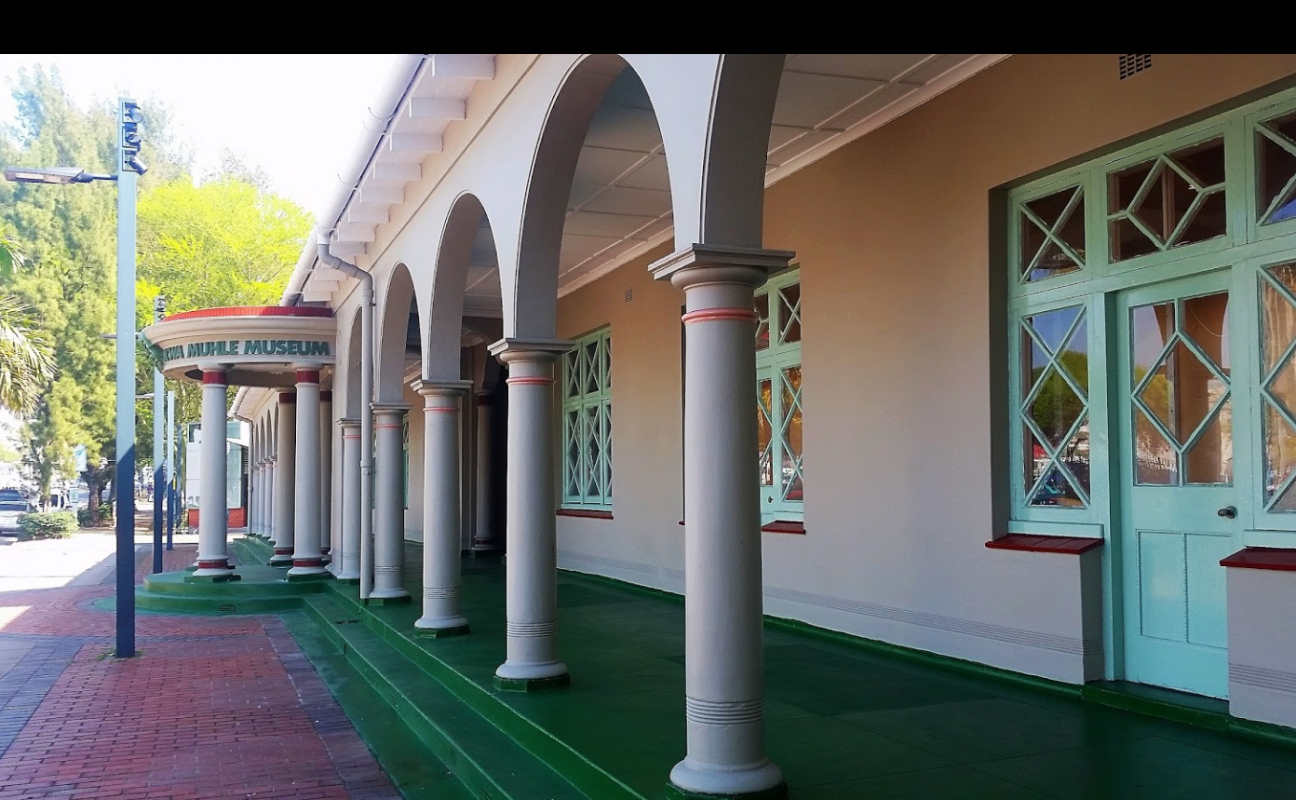
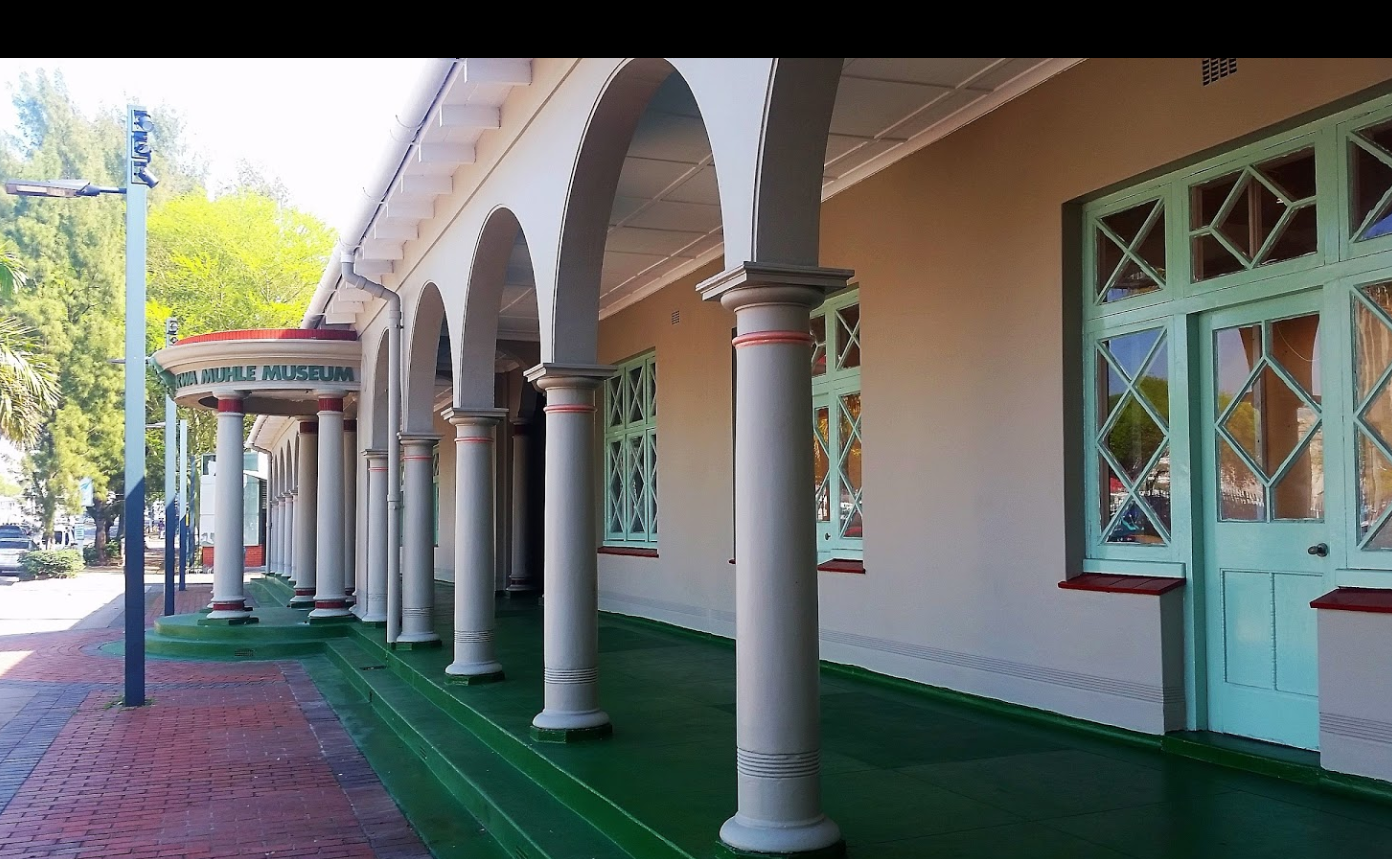
On approaching KwaMuhle Museum one is immediately struck by the elegance of the arch-lined veranda and large sturdy copper-covered entrance doors
This building, once the headquarters of the City’s infamous Native Administration Department and the center of Durban’s harsh system of labour control, has been transformed into a museum. The museum seeks to reflect the Durban’s urban growth and the history of its residents from a range of perspectives.
Visit the KwaMuhle Museum and discover what life was like in and around Durban during and leading up to the apartheid era. Ponder over the exhibits, which include photographic prints of township life, and reflect on the contributions of the ordinary people who laid the foundations of Ethekwini’s development as one of Africa’s leading cities.
The Museum hosts a number of permanent and temporary exhibitions.
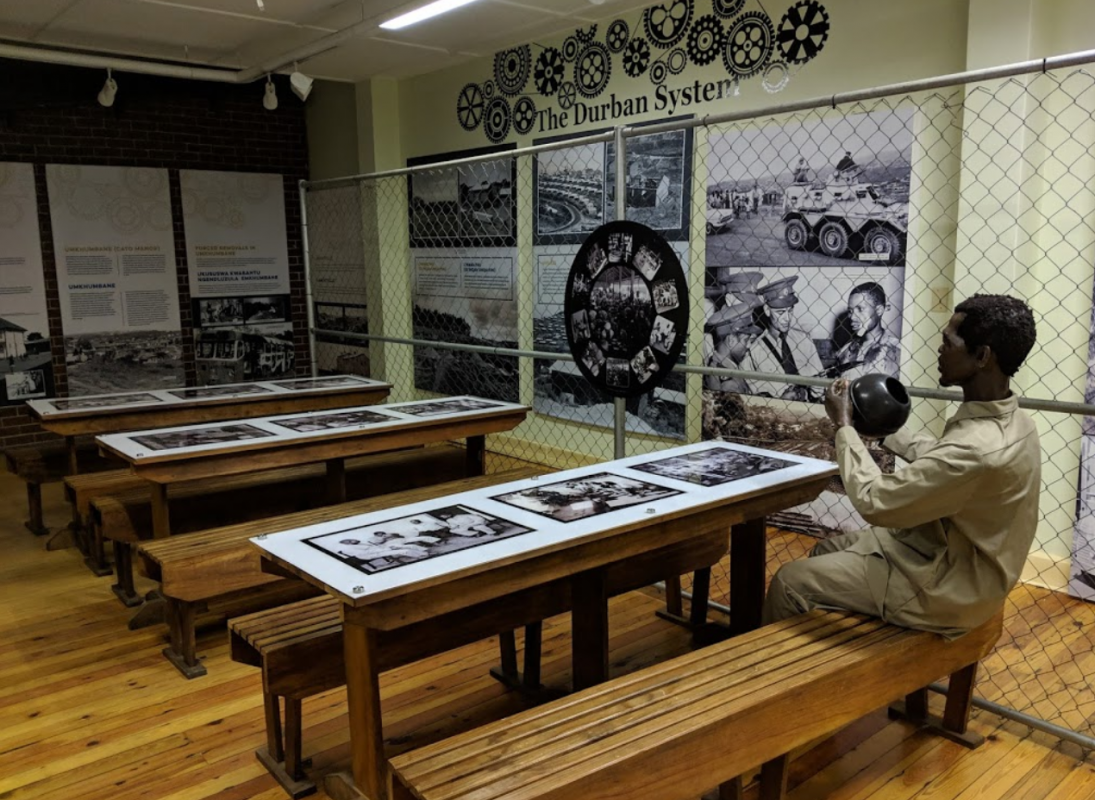
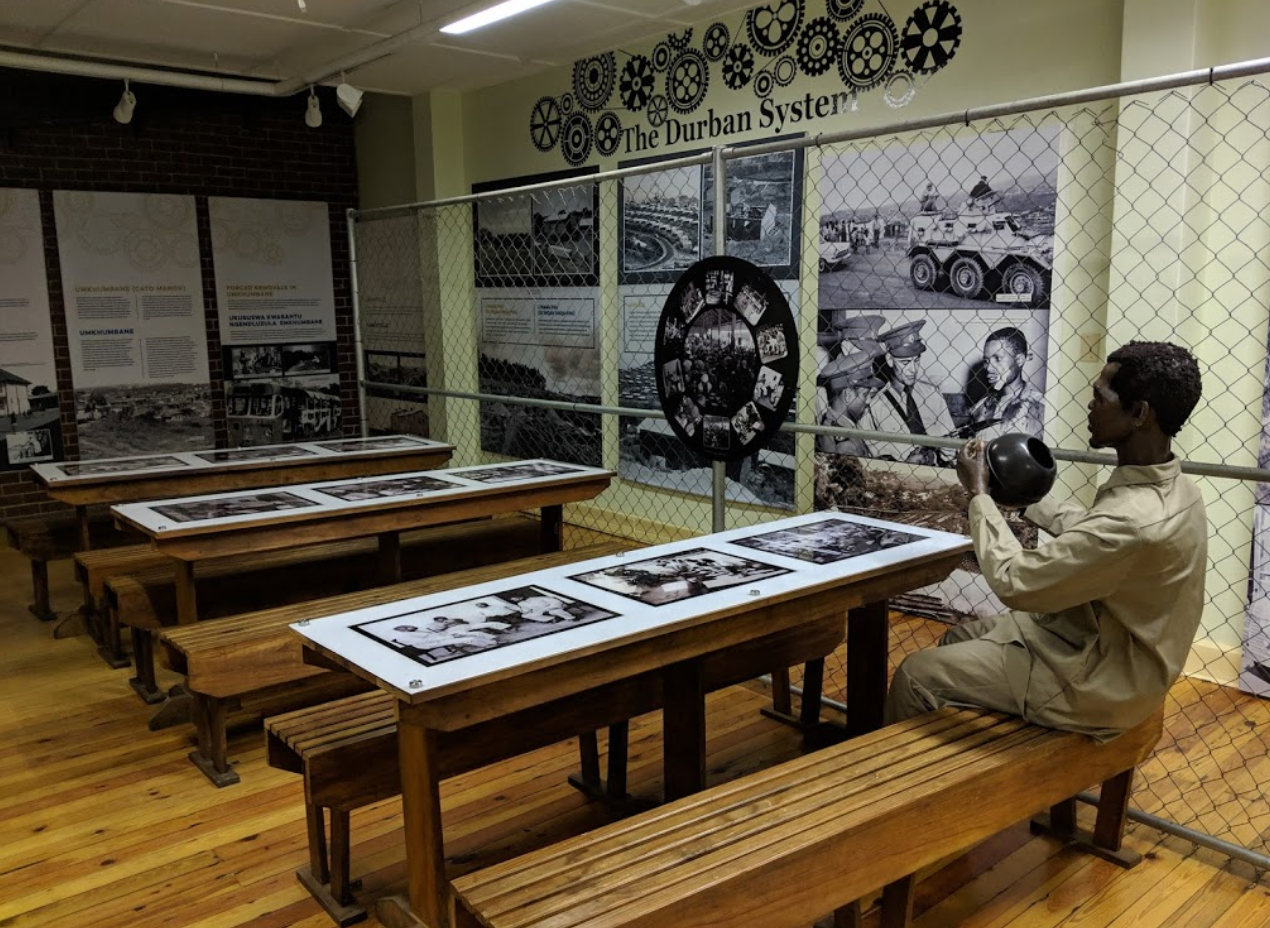
A major attraction at the Museum is an exhibition entitled ‘The Durban System’ which is comprised of well-researched texts, black and white photographs and a themed environment, which work together to detail this form of urban control. This system consisted of ‘influx control’, a municipal monopoly on the production of Zulu beer, the creation of beer halls and the creation of segregated accommodation.